

I’ve always been drawn to how acoustics affects audio production. Sound engineering is more than just recording and mixing. It’s about the science of sound and how it moves through the world. Knowing acoustics lets me shape sound waves for my clients.
Acoustics is key in sound engineering. It helps me control sound in live shows, recordings, or post-production. I use it to manage things like echo, reflection, and diffusion. This makes sure the sound is clear and pulls the listener in.
My skills in engineering and knowledge of sound science help me make music that grabs listeners. I use acoustics to make concert halls sound great and tweak vocal tracks. Acoustics is a big part of my job as a sound engineer.
What is Acoustical Engineering?
Acoustical engineering is all about the study of sound and vibration. It’s a branch of engineering that focuses on designing and controlling sound. Engineers in this field use science and engineering to manage sound in different situations.
Understanding the Science of Sound and Vibration
Acoustical engineering is built on a deep knowledge of sound and vibration physics. We learn about sound waves and how they move. We also look at what affects their movement, like frequency and amplitude.
This knowledge helps us use sound in the best way possible. By understanding sound science and vibration physics, we can make sound work for us.
Combining Acoustics with Engineering Principles
Acoustical engineering blends acoustical engineering with engineering principles perfectly. We use our acoustics knowledge to make systems and products that involve sound. This can be reducing noise or making sound systems better.
By knowing the science of sound and applying engineering, acoustical engineers create new solutions. These solutions improve how we experience sound.
The Role of Acoustics in Sound Engineering
As a sound engineer, I know how big of an impact acoustics has on audio quality. We use sound wave science to control different acoustic factors for the best audio results.
Manipulating Sound Waves for Optimal Audio Quality
Acoustics lets us shape and manage sound waves. By knowing how sound moves, reflects, and interferes, we can place mics, speakers, and sound treatments right. This makes the audio clear, balanced, and immersive.
Controlling Reverberation and Noise Levels
Reverberation makes sounds linger in a space, affecting audio quality. Engineers use acoustics to adjust reverberation for the right mix of clarity and atmosphere. We also use noise reduction methods like insulation and sound-absorbing materials. This cuts down on background noise, making the audio more engaging.
Mastering acoustics in sound engineering lets us make audio that grabs and pulls the listener in. It’s a mix of science and art. I’m excited to be part of this changing field.
acoustics in sound engineering
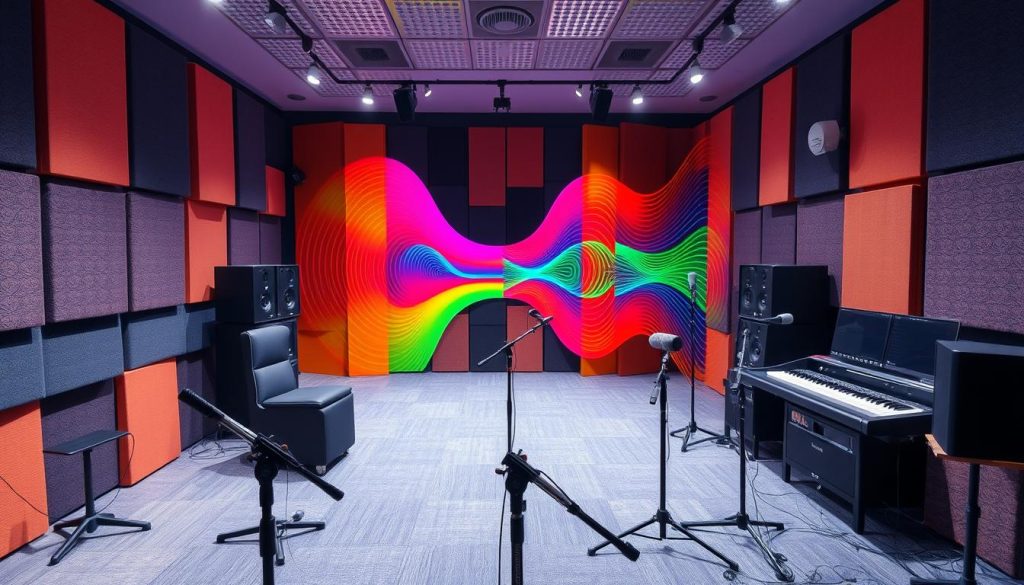
As a sound engineer, I’ve learned how vital acoustics is. It’s the study of sound and how it moves. This knowledge helps us shape the audio we make.
We aim to improve sound quality in our work. This is true for recording studios, live shows, or audio systems. Knowing acoustics lets us pick the best spots for mics and speakers. It also helps us make the room sound better.
For example, we use acoustics to make recording studios sound better. We reduce echoes and create a clear sound. In live shows, we use it to make sure everyone can hear the music clearly.
| Key Acoustic Principles in Sound Engineering | Application |
|---|---|
| Sound wave propagation | Microphone and speaker placement |
| Reverberation and room acoustics | Studio design and live sound optimization |
| Frequency response and resonance | Equalization and speaker tuning |
| Sound absorption and reflection | Room treatment and acoustic treatment |
Learning more about acoustics helps us make better audio experiences. It’s where science meets art. I love exploring this in my work.
Architectural Acoustics: Designing Spaces for Sound

I love how architecture and sound work together. Architectural acoustics is all about making spaces sound their best. It’s a field where architects and sound engineers team up. They make places like concert halls and auditoriums that sound amazing.
Concert Halls and Auditoriums: Enhancing Sound Quality
Creating concert halls and auditoriums is a big job. It needs a deep knowledge of sound and building design. Things like room size, shape, and where sound-absorbing surfaces are placed matter a lot. Engineers make sure these places sound great for everyone.
Using architectural acoustics and sound space design, engineers make concert hall acoustics and auditorium acoustics stand out. They pick materials and arrange the space to improve sound quality. This makes the music feel alive and engaging for everyone.
Environmental Acoustics and Noise Control
I’ve spent my career studying how sound interacts with the environment. Environmental acoustics is a key part of my work. It deals with reducing noise from things like traffic, machines, and fun activities.
Noise can harm our health, making it hard to sleep, affecting our thinking, and even causing heart problems. That’s why engineers like me are vital. We measure, predict, and control sounds to make places quieter and more productive.
We use many methods to fight noise pollution. This includes placing sound sources carefully, using noise barriers, and sound absorbers. We also use special software to plan our actions. This way, we can lessen noise and make places sound better.
Acoustic engineers also look at how noise affects animals and nature. We work with experts to make sure our work helps people and nature. This keeps the natural world safe.
As cities grow and get noisier, we need better ways to handle noise. By using our knowledge in acoustics and science, we can make places healthier and more in tune with nature.
Musical Acoustics: The Physics of Music
I love how music and sound science work together. Musical acoustics looks into the science of making, spreading, and hearing music. It helps us make better instruments and singing. This way, we can improve music for everyone.
Acoustic Principles in Musical Instrument Design
Designing musical instruments is a mix of old research and new ideas. Things like violin strings and woodwind tubes are made to sound just right. Engineers work with makers to pick the best materials and shapes. This makes sure the sound is clear and strong.
The Science of Singing and the Human Voice
The human voice is amazing in music science. It’s made up of the lungs, vocal cords, and mouth working together. Engineers study how to make singing better. They help singers sing louder and sound better.
As I learn more about musical acoustics, I see how science and creativity meet. Engineers connect sound science with music’s beauty. They help make music experiences we love.
Psychoacoustics: Perception and Cognition of Sound
As an acoustical engineer, knowing about psychoacoustics is key. It’s the study of how we hear and understand sound. It looks at the ways our body and mind work together to hear.
Psychoacoustics helps match sound’s physical traits with how we feel them. Engineers study the human ear to make sounds that feel right to us. They design sounds and systems that fit how we naturally hear.
Sound perception is a big part of psychoacoustics. Our brains shape what we hear based on things like pitch, loudness, and where the sound comes from. Engineers use this to change sounds, like making them echo or fade away, to create the perfect sound.
Understanding sound cognition is also vital. It’s about how we make sense of sounds. Things like memory, focus, and feelings affect how we hear. Engineers use this to make sounds that are not just good technically, but also enjoyable.
Psychoacoustics is key in acoustic engineering. It connects sound’s physical side with how we feel it. By using this knowledge, engineers can make sounds that really connect with us, giving us a deep and engaging listening experience.
Ultrasonics and Underwater Acoustics
As an acoustical engineer, I find ultrasonics and underwater acoustics very interesting. Ultrasonics deals with sound waves that are too high for humans to hear. It has many uses, like in medical tests and checking materials without damaging them. I use my knowledge of these sound waves to create new technologies.
Underwater acoustics is also very interesting. It’s about how sound moves under water. This field helps us make better sonar, talk underwater, and monitor the ocean. By studying sound in water, I help make systems that let us learn more about the sea.
I am amazed by the power of sound in both ultrasonics and underwater acoustics. As an engineer, I aim to make new things possible. I use my knowledge of sound to make solutions that can change industries and help us understand the world better.